

SEI
The Credit Score for Your Soil System
One score that reveals how efficiently your soil system works — built entirely from your existing soil test data.
WHAT IS SEI™?
The Soil Efficiency Index (SEI™) is a soil system performance metric that transforms routine soil test data into a simple, trackable score.
It answers the question every grower is really asking:
Is what I'm doing actually working?
Rather than reporting individual nutrient levels in isolation, SEI™ evaluates the relationships between the key soil properties that determine how well your soil system retains nutrients, cycles them back to crops, and responds to fertilizer inputs.
The result is one number — easy to understand, easy to track, and easy to act on.
THINK OF IT LIKE A CREDIT SCORE
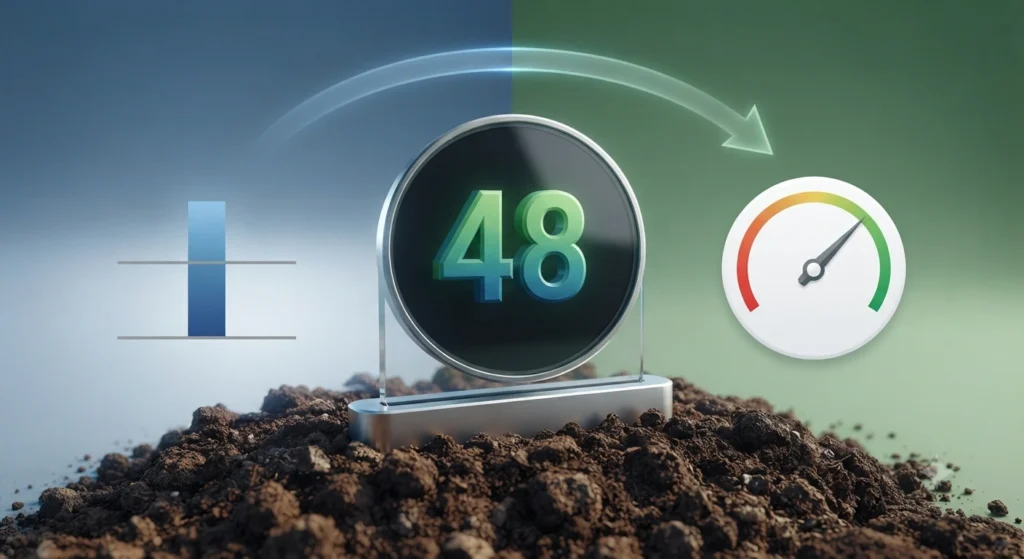
A credit score doesn’t tell you your income, your mortgage balance, or your savings rate. It takes all of those variables and combines them into a single number that tells you one important thing: how well your financial system is functioning.
SEI™ does the same for your soil.
It doesn’t replace your individual soil test readings. It adds the one thing they’ve always been missing — a single measure of whether your soil system is working efficiently as a whole.
Credit Score | SEI™ | |
Combines many variables | ✓ | ✓ |
Single trackable number | ✓ | ✓ |
Shows direction over time | ✓ | ✓ |
Identifies what to improve | ✓ | ✓ |

WHAT SEI™ MEASURES
SEI™ reflects four key dimensions of soil system performance:
Soil System Efficiency — How well your soil functions as a complete system.
Nutrient Retention Potential — How well your soil holds onto the nutrients you apply.
Nutrient Cycling Capacity — How effectively nutrients are recycled and made available to crops.
Fertilizer Use Efficiency Potential — How efficiently your soil converts fertilizer inputs into crop nutrition.
WHAT DRIVES SEI™
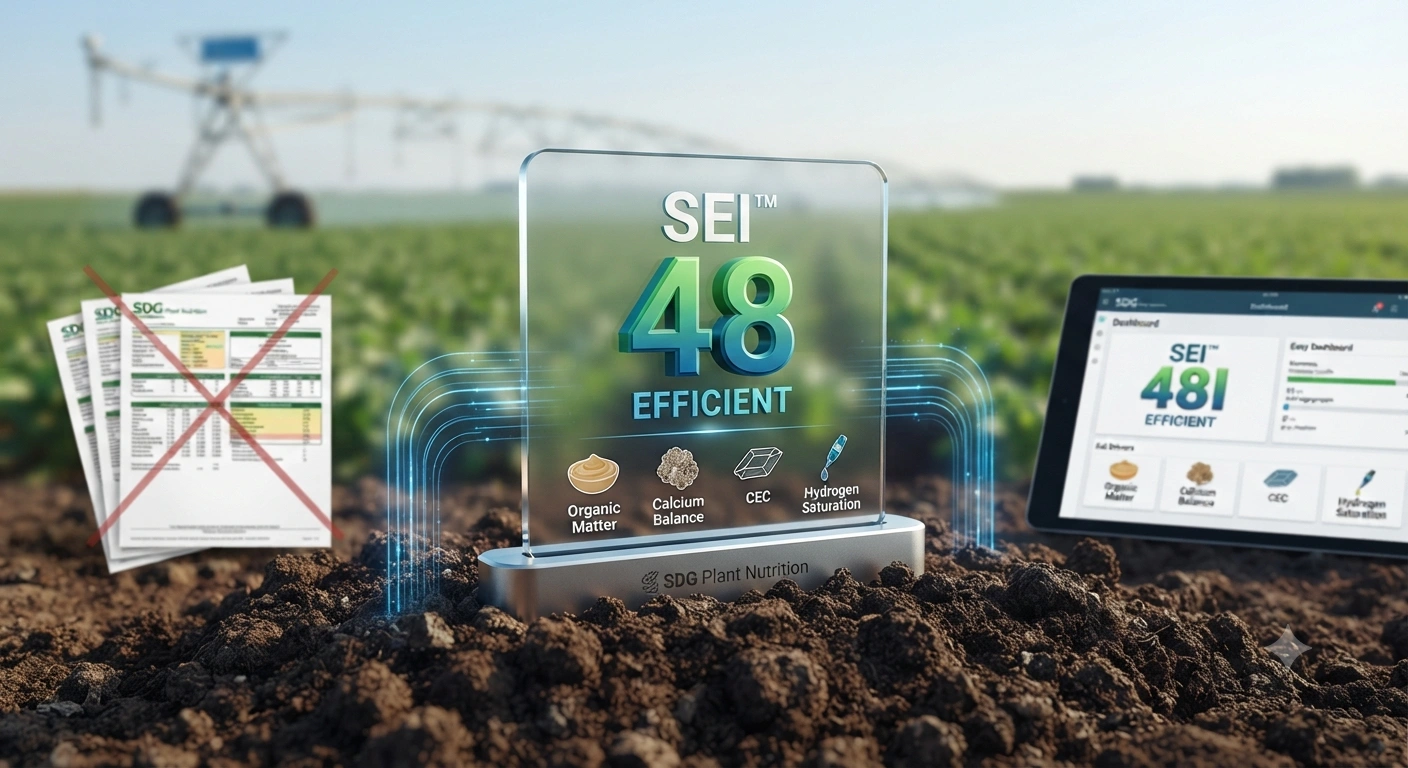
SEI™ integrates four key drivers that determine how efficiently your soil system works.
Organic Matter — The Biological Engine
Fuels soil life, drives biological activity, nutrient cycling, and overall soil function. Without it, the system stalls.
Calcium Balance — The Structural Foundation
Builds strong soil structure, improves aggregation, water infiltration, and root growth. The architecture everything else depends on.
CEC — The Nutrient Storage System
Holds and exchanges nutrients so plants have access to what they need, when they need it. The capacity of the system.
Hydrogen Saturation — The Acidity Pressure
Indicates acidity pressure in the soil that suppresses nutrient availability and microbia l activity. The hidden constraint that limits everything above it.
When these four drivers are in balance, your soil system works efficiently. SEI™ measures exactly where that balance stands — and what’s pulling it off course.
THE SEI SCORECARD
Your SEI™ score places your soil system into one of four performance categories — each with a clear picture of what it means in the field and what to focus on next.
25 — Inefficient
Soil system constraints dominate. Nutrients are lost, tied up, or inconsistently utilized. Poor return on fertilizer investment.
Management Focus: Build OM, improve structure, address acidity and calcium balance, reduce loss pathways.
25–40 — Functional
The soil system is working, but important limitations remain. Crops respond to fertilizer, but efficiency and consistency are variable.
Management Focus: Remove key constraints, improve nutrient timing, increase biological activity, improve Ca efficiency.
40–55 — Efficient
Good balance of nutrient storage, cycling, and structure. Strong fertilizer response and nutrient delivery. Good resilience under stress.
Management Focus: Optimize fertility programs, nutrient synergy, and yield potential.
55 — High Efficiency
Highly optimized soil system. Strong nutrient use efficiency, resilient production, and consistent performance.
Management Focus: Maintain gains, fine-tune micronutrients, biologicals, and advanced management strategies.
THE THREE ROLES OF SEI™
A Benchmark
Know exactly where your soil system stands today — and how it compares to regional and national benchmarks.
A Progress Tracker
Upload soil tests year over year and watch your SEI™ score change. Track whether your management decisions are building or degrading soil efficiency over time.
A Decision Validation Tool
Made a management change? SEI™ tells you whether it worked — with a score that reflects real soil system performance before and after.
WHAT SEI™ CAN TRACK
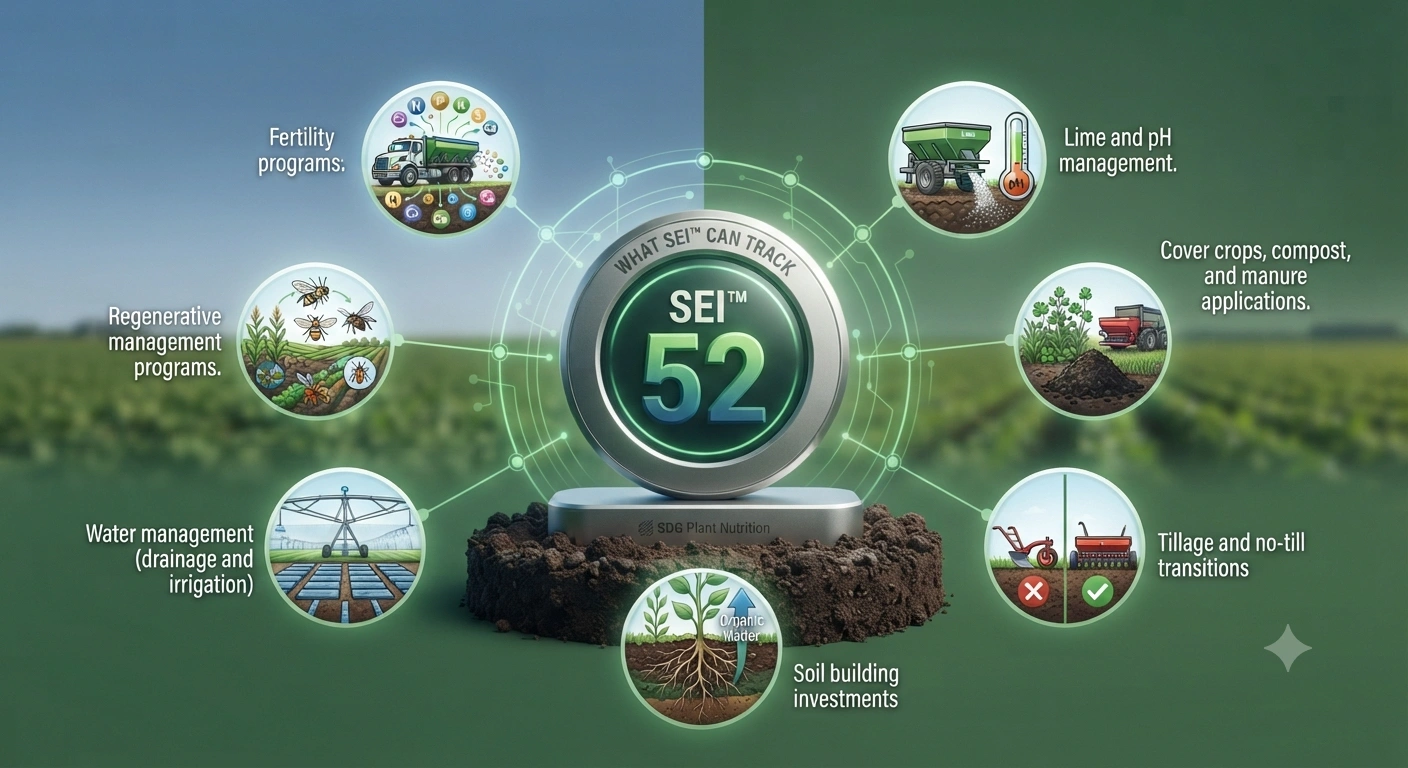
SEI™ captures the impact of virtually every major management decision:
- Fertility programs (N, P, K, S, Ca, micronutrients)
- Lime and pH management
- Cover crops, compost, and manure applications
- Tillage and no-till transitions
- Soil building investments
- Water management (drainage and irrigation)
- Regenerative management programs
Every decision leaves a footprint in the soil. SEI™ shows you the direction
NOT ANOTHER SOIL HEALTH SCORE
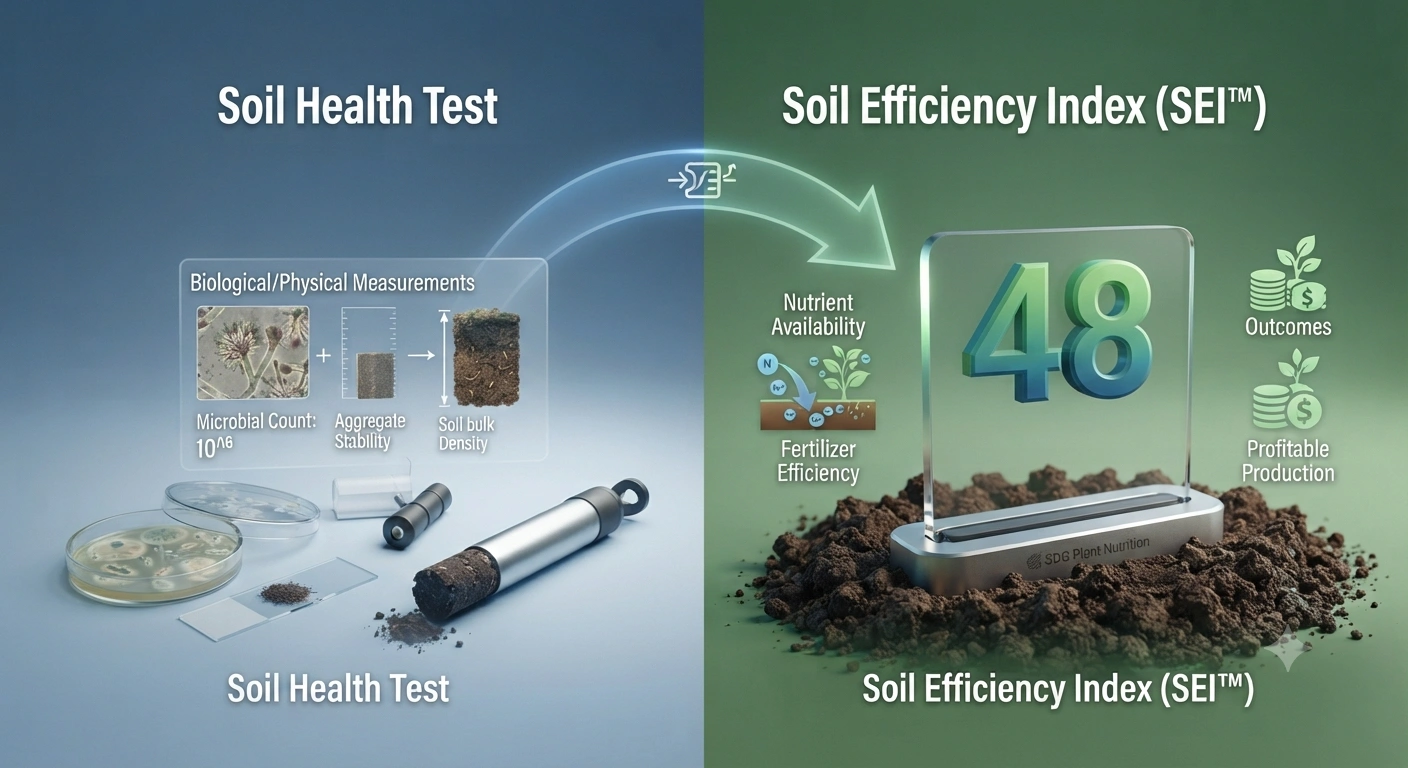
SEI™ is not a soil health test and it is not designed to replace one.
While soil health tests focus on biological and physical measurements, SEI™ focuses on something different: how effectively the soil system functions to support nutrient availability, fertilizer use efficiency, and profitable crop production.
SEI™ is built for functional outcomes that directly affect your bottom line:
- Better nutrient retention — keep what you apply
- Better nutrient cycling — deliver it when crops need it
- Better fertilizer use efficiency — get more from every dollar
- Better return on management investment — prove your decisions are paying off
SEI™ isn’t just another score. It’s a measure of what matters most. Built on science. Focused on outcomes. Designed for your bottom line.
VALIDATION
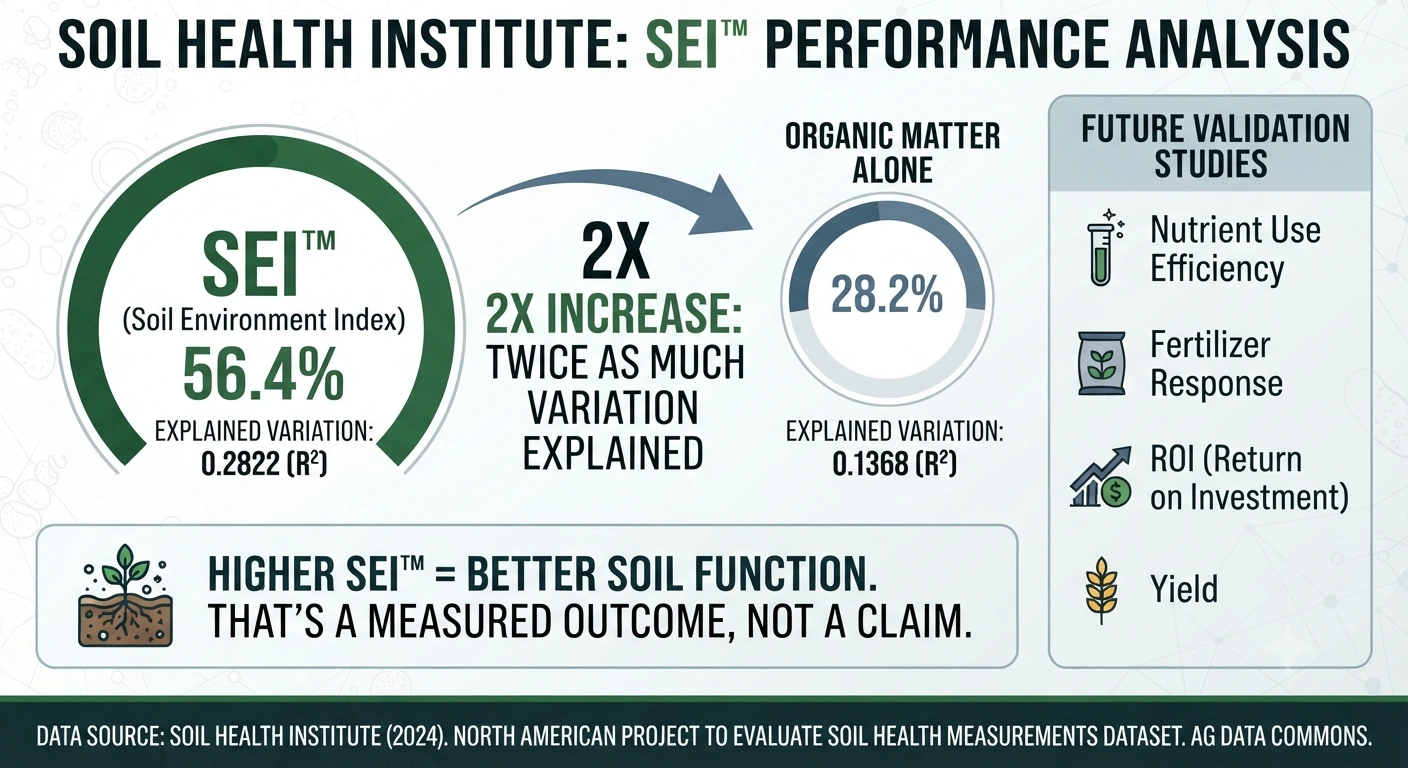
SEI™ has been evaluated against aggregate stability — one of the most reliable indicators of overall soil function.
The result: SEI™ explains twice as much variation in aggregate stability as organic matter alone (R²=0.2822 vs. R²=0.1368), using data from the Soil Health Institute’s 2024 North American dataset.
Higher SEI™ = Better soil function. That’s a measured outcome, not a claim.
Future validation studies are underway targeting nutrient use efficiency, fertilizer response, ROI, and yield.
Data Source: Soil Health Institute (2024). North American Project to Evaluate Soil Health Measurements Dataset. Ag Data Commons.
HOW SEI™ IS CALCULATED
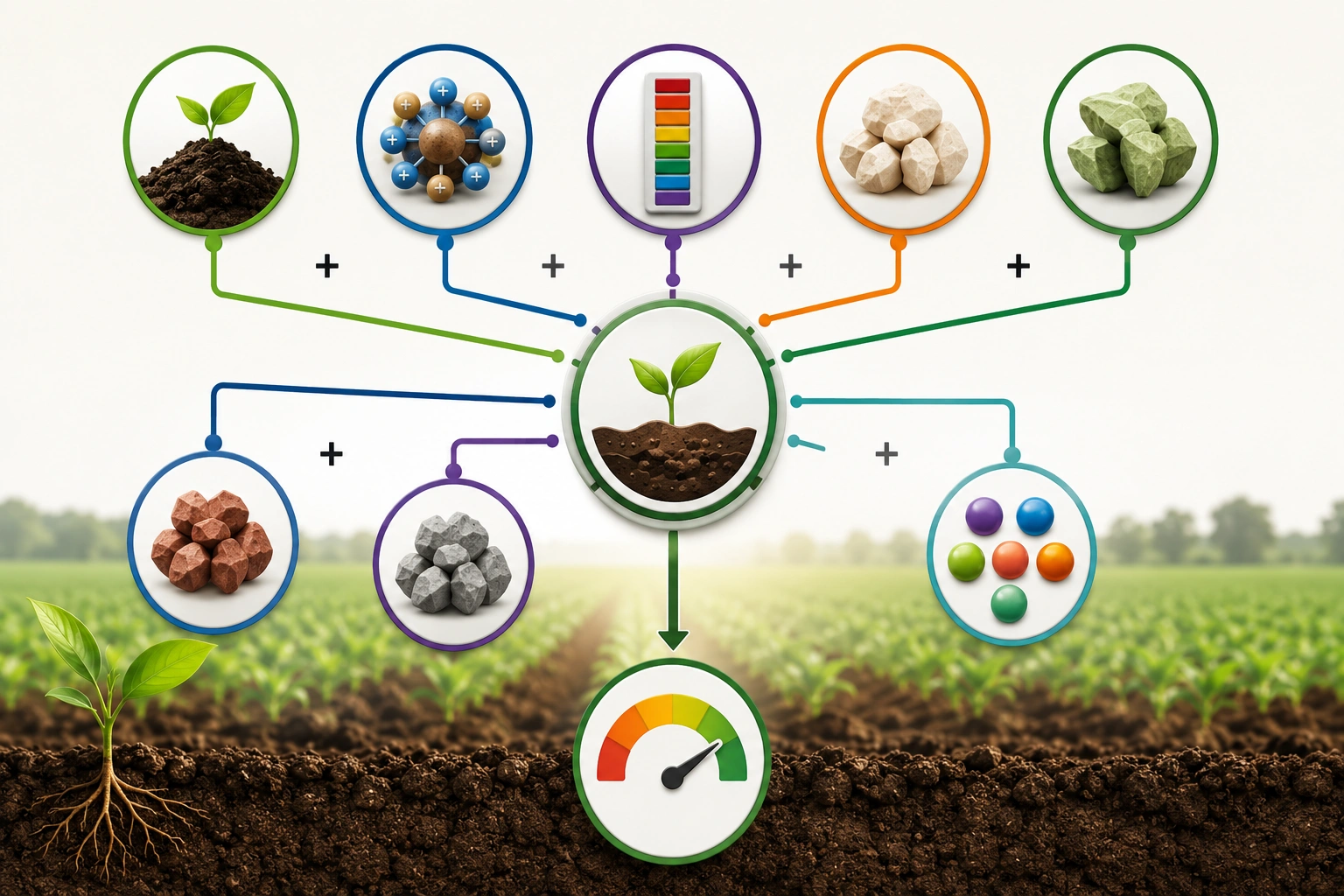
SEI™ uses key soil properties commonly reported on routine soil tests:
Organic Matter (OM) · Cation Exchange Capacity (CEC) · Soil pH · Calcium (Ca) · Magnesium (Mg) · Potassium (K) · Phosphorus (P) · Micronutrients (when available)
These values are evaluated using proprietary algorithms developed by SDG Plant Nutrition to assess overall soil system efficiency. The exact methodology is proprietary — but the goal is simple: measure how effectively a soil system can store, cycle, and deliver nutrients to support crop production.
Ready to See Your Score?
Upload your existing soil test and receive your professional SEI™ report within 2–3 business days. No additional testing required.